

- Your seat’s state: your hand and the board by card id, the special tiles, and only counts for the other hand and the draw pile.
- Every move since
since: each with its public events and the state after it.
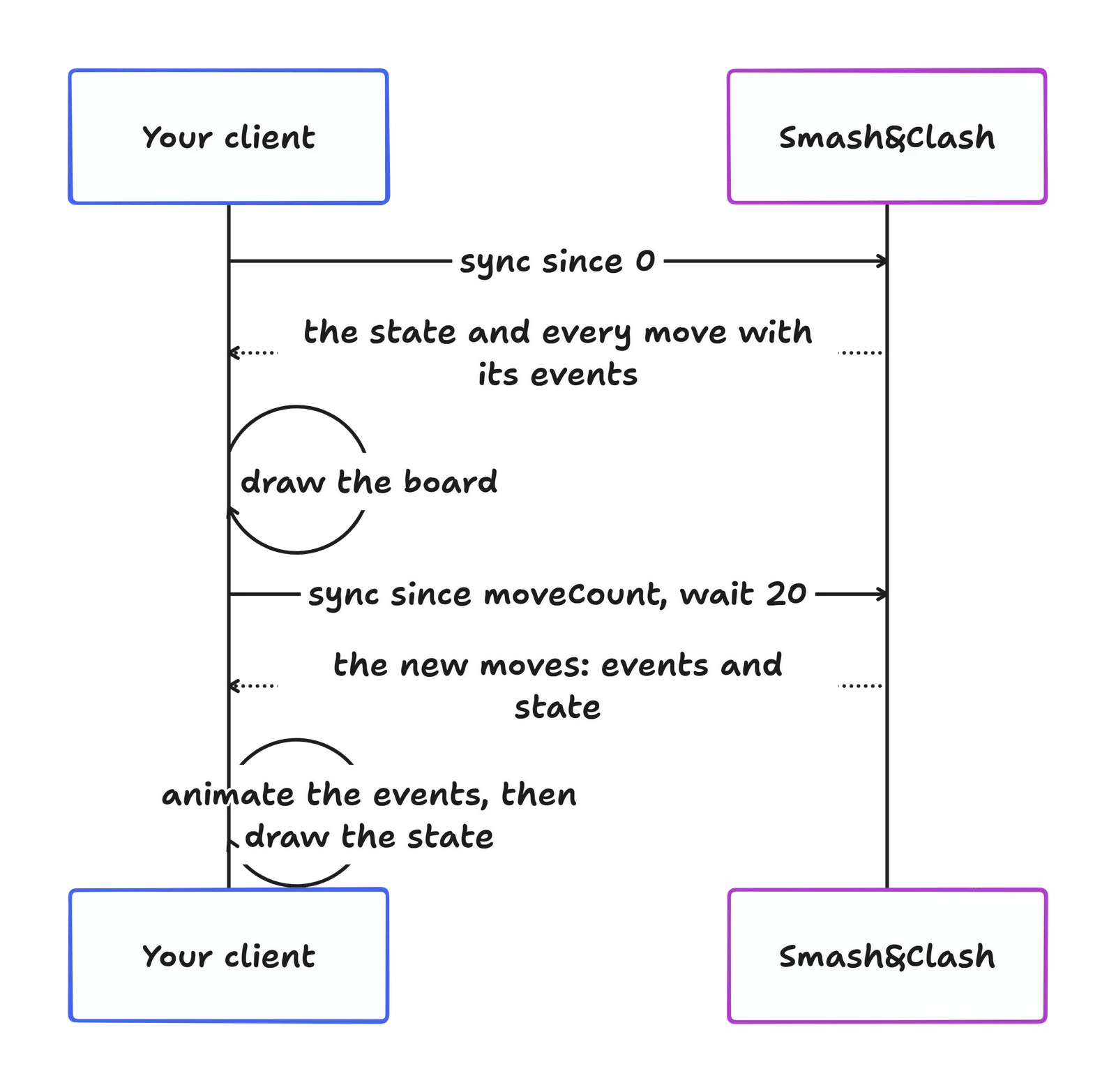
examples/node/draw-your-own-board.mjs in smashandclash/tldraw, which also has a full client that draws the game on a whiteboard.
SeatSync from game.sync() without updating game.state or game.view. Draw the returned s.state, and call await game.refresh() before selecting a move from game.legalMoves. Refresh when the status changes so the next long-poll uses the current status. A sync received while nobody has moved still contains the current board, so render that snapshot even when s.moves is empty. See SDK lifecycle.
The state
-
board[r][c]:r0–2 is rows 1–3, andc0–4 is columns A–E. The SDK’scellToRC('C2')andrcToCell({ r, c })convert.


- Card ids name cards in the card list, which gives values, colours, art and animation. The game view (
game.view) carries the samecardIdon every hand and board card. - Build your own client covers drawing the cards, the attack animation and the sound.
- A card’s sides are read from its owner’s side; see move names.
The moves
Each entry inmoves is { index, seat, name, move, events, state }. The events describe what happened, in order:
Nothing in a sync shows a card the seat couldn’t see at the table. A draw is a count, and a swap carries no ids. When the game is over,
reveal carries its seed. See fair play.